Self-Employment: The Flexible Path
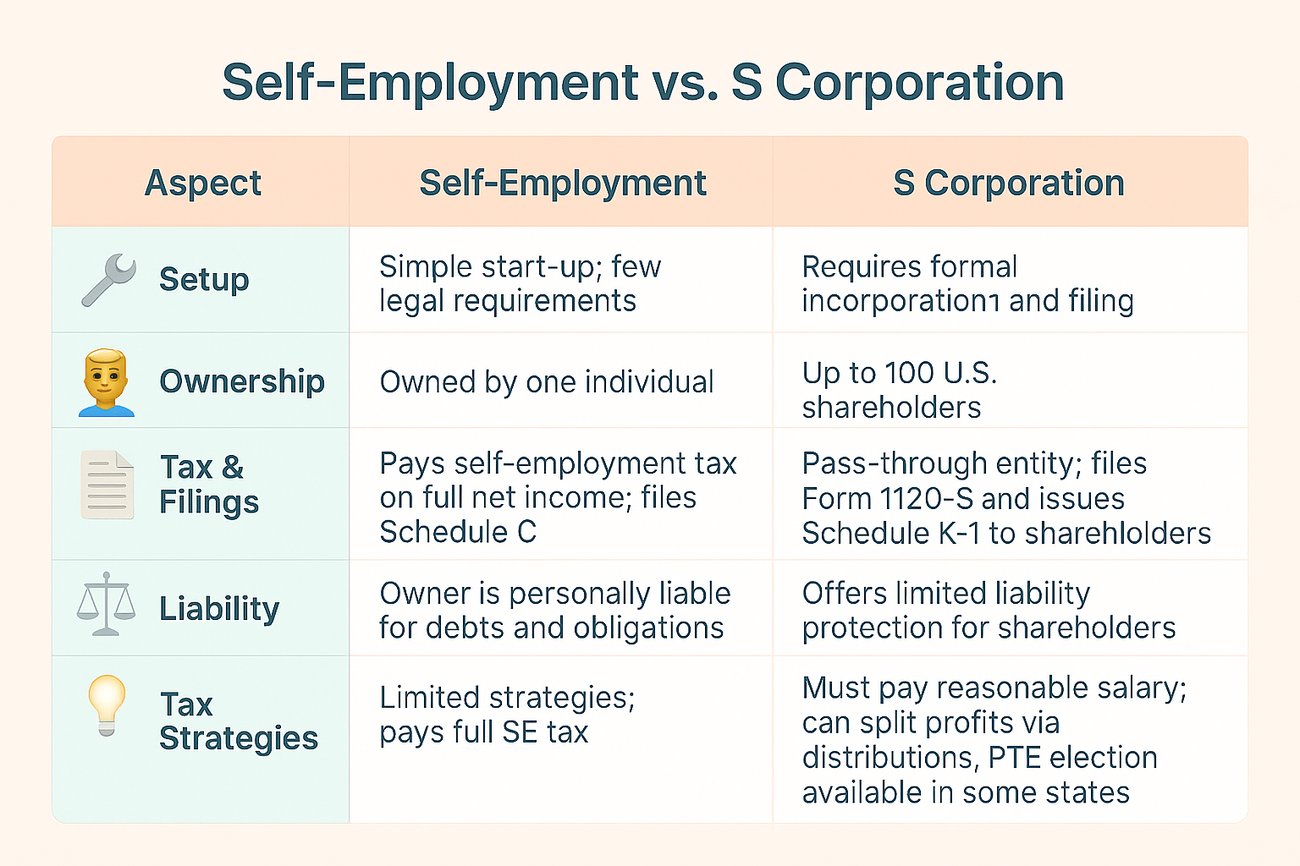
Self-employment, also known as sole proprietorship, allows individuals to work independently, taking charge of their income and taxes. It’s a popular choice for freelancers and small business owners because it’s easy to set up, allows for a quick launch, and keeps day-to-day administrative and accounting tasks affordable and straightforward.
Embracing the S Corporation Structure
An S Corporation offers liability protection, tax advantages, and enhanced financial credibility by separating personal and business finances. One key benefit is the potential to save on payroll taxes—owners can take a reasonable salary and receive the remaining income as distributions, which are not subject to payroll or self-employment tax.
Making the Transition
Transitioning to an S Corporation offers significant advantages for growing businesses. The process involves incorporating the business, obtaining an EIN, and submitting IRS Form 2553. After setup, it is important to establish payroll, manage profit distributions, and maintain organized compliance records to meet regulatory requirements.